

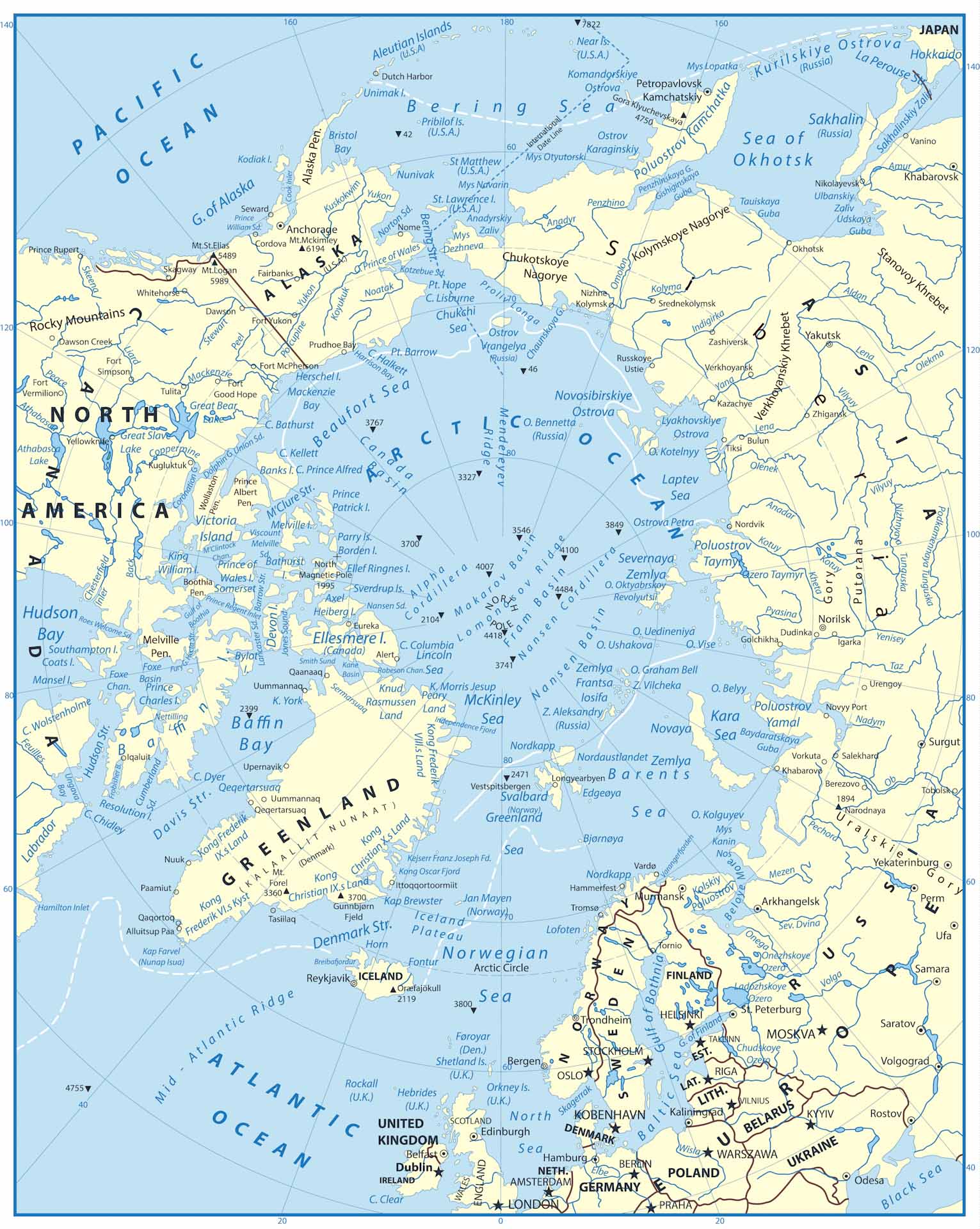
On January 28, 2026, The British Defence Committee launched a new inquiry into Defence in the High North[1], calling for written evidence to assess the current and emerging threats in the region, what the UK’s defence and security interests are, and whether current strategies, capabilities and alliances are sufficient to counter these threats.
During the Munich Security Conference in February, Dr. Anna Wieslander, Director for Northern Europe at the Atlantic Council and member of the Royal Swedish Academy of War Sciences, was encouraged by the Chair of the Defence Committee in the British Parliament to contribute to the inquiry.
The submission has now been published.[2] Below is a summary of its main recommendations:
- The UK should consider treating critical undersea infrastructure protection as a core High North deterrence task and integrate monitoring, attribution, and response coordination into allied planning and operations.
- UK policy tools should be judged against whether they strengthen deterrence-by-denial and reduce vulnerability to grey-zone coercion, particularly against undersea infrastructure and maritime approaches.
- The UK needs to balance scarce high-demand assets between the High North/North Atlantic and other theatres in a way that avoids overstretch and sustains readiness for the most immediate threat.
- The UK risks strategic overcommitment by simultaneously leading the JEF, meet NATO war plan commitments for major land reinforcement, and sustain its nuclear deterrent under existing defence investment plans. It should be carefully tested whether the UK has the readiness, mass, and enabling capacity to “pull its weight” in a protracted High North contingency alongside its other alliance commitments.
- Defence-industrial cooperation can support High North readiness and resilience, particularly for maritime surveillance, secure communications and undersea infrastructure protection.
- The UK should leverage UK–Nordic industrial cooperation (including UK–Sweden) alongside UK–Norway undersea security cooperation to build resilient supply chains and deployable capability in the North Atlantic/High North, while remaining interoperable within NATO frameworks and aligned with growth objectives.