

”God fights on the side with the best artillery.” – Napoleon Bonaparte
Religion and warfare have long been intertwined. The Romans worshipped Mars, the god of war, while both ancient Greek and Norse mythologies featured two distinct war deities, each representing different aspects of warfare. In Greek mythology, Ares embodied violence and fury, while Athena represented strategy and control but also the cunning part of warfare or what the Russians call Maskirovka (the use of deceptive tactics). Similarly, Norse mythology offered Thor, the god of thunder and brute force, and Tyr, the god of tactical warfare or the god of Maskirovka. This duality allowed ancient stories to explore different dimensions of battle and warfare. These mythological figures were conceived long before the advent of gunpowder artillery and airborne technologies, tools that have reshaped the battlefield. These tools have become the new gods of war but forged not in myth but in metal, chemistry and computer code.
The ongoing war in Ukraine unfolds like a mythological epic, where the spirits of Ares and Athena, or Thor and Tyr, clash across scorched landscapes. The thunderous brutality of mass artillery strikes channels the fury of Ares and Thor, gods of raw power and destruction. In contrast, the strategic deployment of drones and adaptive tactics evokes the cunning and precision of Athena and Tyr, deities of calculated warfare and deception. Modern warfare, as seen in this conflict, has a layered approach to firepower. Long-range precision capabilities, such as cruise missiles and airstrikes, are essential for strategic depth and disruption far beyond the frontline. At the same time, traditional artillery systems, including both barrel and rocket platforms, deliver the bulk of destructive force across wide areas. Complementing these are tactical close-range systems like mortars and short-range air support, in particular the use of first-person-view drones, which provide immediate responsiveness and coverage in frontline engagements. As drone capabilities evolve, the concept of the frontline itself is being redefined, expanding from a few hundred meters to strike ranges of 40 kilometers or more. Historically, the battlefield was a narrow line of clashing swords; today, it has become a multidimensional zone where danger descends from the skies. This transformation marks a shift from proximity-based combat to layered lethality, where distant precision and direct impact coexist in a seamless spectrum of destruction.
This use of massive force is called attrition warfare, which grinds down opponents through sheer volume. The alternative to this is maneuver warfare, which is about outthinking and unraveling the enemy. In mythological terms, attrition warfare, echoing the fury of Ares and Thor, while maneuver warfare is the warfare of Athena and Tyr, deceptive and precise. Military strategist Edward Luttwak defines maneuver warfare as a strategy of systemic disruption, the deliberate targeting of an adversary’s vulnerabilities rather than their strengths (Luttwak, 1980). These vulnerabilities may be material, psychological, logistical, technical, or organizational. The NATO Air-Land Battle doctrine, however, was criticized for leaning too heavily on long-range firepower, echoing traditional American attrition thinking (US Army, 1982). By prioritizing the defeat of enemy formations through superior firepower, it risked sidelining the deeper operational coordination between maneuver and firepower that defines true systemic disruption. This is where drones enter the equation, not merely as tools of surveillance or strike, but as agents of maneuver in a digitized battlespace. Drones restore depth by enabling real-time reconnaissance, adaptive targeting, and tactical flexibility. They bridge the gap between firepower and movement. In this sense, drones embody the spirit of maneuver warfare, not through brute force, but through systemic disruption guided by intelligence and speed. The combination of drones and artillery is a match forged in the heavens of the gods of war, a union of precision and power, of Tyr’s calculated strikes and Thor’s thunderous force. Together, they form a layered system of destruction where intelligence guides impact, and brute strength is sharpened by real-time vision. This synergy transforms the battlefield into a realm where myth meets machine, and where victory is shaped not just by firepower, but by the orchestration of eyes in the sky and hammers on the ground.
Historically, the Russian military has been artillery-centric, a legacy dating back to the Napoleonic era that continues to shape its doctrine today. Faced with tactical challenges, Russian forces often default to overwhelming bombardment, favoring saturation over subtlety. This approach channels the mythic force of Thor’s hammer: problems are not solved with finesse but crushed under explosive weight. Rocket artillery exemplifies this ethos, designed to drench wide areas in chaos, suppresses enemy positions, disrupts formations, and shatters morale through sheer volume. It is warfare as thunder, loud and indiscriminate, a brutal echo of ancient gods of destruction.
Before drones became instruments of war, they were silent observers, tools of vision, not destruction. In the 19th century, tethered balloons with cameras offered a god’s-eye view of battlefields. Early airplanes followed suit, initially used for surveillance, later armed by pilots, transforming observation into combat. This transformation occurred during WWI. The concept of pilotless aircraft surfaced during WWI but remained theoretical. It wasn’t until the Cold War that unarmed drones truly took flight. The Ryan Firebee, launched in the 1950s, flew reconnaissance missions over hostile territory. As technology advanced, drones shifted from military eyes to civilian tools. Repurposed for search-and-rescue and more, they became field guardians and environmental sentinels. The 2010s saw drones democratized, as prices dropped and especially battery performance improved, bringing them to the masses. Yet even in peace, war’s shadow lingers. Most civilian drones descend from military prototypes. Their sensors and autonomy were born in conflict but now serve community and commerce. These drones embodied the watchful gaze of Athena and Tyr, precisely and restrained.
The transformation of drones from silent observers to lethal instruments marked a turning point in modern warfare. While early drones were designed to see, not strike, the idea of arming unmanned systems gained traction during the late 20th century. The first operational armed drones emerged in the 1990s, shaped by the demands of asymmetric warfare. The U.S. Predator drone, initially built for surveillance, was retrofitted with Hellfire missiles during operations in Afghanistan and Iraq. This fusion of reconnaissance and strike capability created a new battlefield archetype: the hunter-killer drone. One result of this fusion was the creation of a new type of fear, the fear of drones and the understanding of them as unpredictable. In Greek mythology, the god that personifies fear and panic is Phobos. He is the son of Ares and often accompanies him into combat. Phobos embodies the psychological dread, the fear of the unknown, the unseen, and the lurking threat. With the threat of drones, Phobos have made his way into modern warfare as a representation of stealth and lurking danger.
Armed drones offered a seductive promise, precision without risk. The drones offer the ability to loiter above targets for hours, strike with minimal collateral damage, and withdraw without endangering pilots. Warfare became remote, decisions made from continents away, and the line between surveillance and execution blurred. Nations and non-state actors alike have embraced drones. Their roles have expanded, from targeted assassinations to frontline combat support. Armed drones are no longer just weapons; they are now symbols of a new kind of warfare, were Athena’s cunning mergers with Ares’ fury, together with the instillation of fear in broader sense through Phobos.
In the 2020 war between Armenia and Azerbaijan over Nagorno-Karabakh, drones did not merely support the battles. The second Nagorno-Karabakh War was the first full drone-fueled war. Azerbaijan, backed by Turkish and Israeli technology, deployed armed drones with devastating precision. Armenia’s entrenched positions, air defenses, and armored units were systematically dismantled from above. The drones’ different abilities changed how defenders could use terrain as protection. Ground forces advanced not through brute force, but through the wings of unmanned systems. This conflict marked a turning point: a conventional army overwhelmed by unmanned precision. The gods of war had changed shape. We saw something similar again in Syria during the last months of 2024. A regular army, that had little experience of drone warfare, was overwhelmed by militia that had been trained by drone experts (McDonald, 2024).
At the outset of the full-scale invasion in February 2022, Russia attempted a lightning strike aimed at decapitating Ukraine’s leadership in Kyiv. This operation relied heavily on deception, speed, and surprise, hallmarks of Tyr and Athena rather than Thor or Ares. The plan failed due to fierce Ukrainian resistance, poor coordination and logistics, bad weather, and an underestimation of Ukraine’s defensive capabilities. This early phase of the war highlighted the importance of strategic planning and intelligence and not wishful thinking.
As the war progressed, Russia leaned back into its traditional reliance on massive artillery barrages to achieve its objectives. Ukraine, lacking the same volume of artillery and ammunition, was forced to innovate. This led to a more adaptive and technology-driven response, including the rapid integration of drones into both reconnaissance and strike roles. One of the most devastating aspects of the war in Ukraine has been the Russian targeting of Ukrainian civilian infrastructure, a tactic that channels the destructive fury of Ares and Thor but for the civilian population bears the mark of Phobos. These attacks have included strikes on Ukrainian power grids, water systems, hospitals, health clinics and residential buildings, often far from the front lines. While traditional artillery has played a role in the frontline, it is the combination of drones and missiles that has made these assaults precise, unpredictable, and psychologically damaging. Russia has employed cruise missiles, ballistic rockets, Russian drones, and Iranian-made Shahed drones in coordinated waves to overwhelm Ukrainian air defenses. The drones, often flying low and slow, are difficult to detect and intercept, especially when launched in swarms. The strategic goal behind these attacks is often psychological and logistical: to break morale, disrupt daily life, and force Ukraine to divert resources from the front to protect its cities. Lives are lost and infrastructure reduced to rubble. A photo of battlefields in Donbass region look like photos of Berlin 1945 and Grozny 1999. In mythological terms, this calculated chaos is a blend of Athena’s cunning and Phobos’ terror.
Ukraine has responded with improved air defense systems, including Western-supplied platforms like NASAMS and Patriot missiles, but the cost asymmetry is obvious. A drone costing a few thousand dollars may force the launch of a missile worth hundreds of thousands (Kesteloo, 2024). This has made drone warfare a very cost-effective tool for strategic disruption, a central feature of modern warfare, and a tool to bring time on the side of the aggressor. As is often the case in wartime, both sides accelerated the deployment of new technologies, a relatively easy task, and experimented with new command and control models, a far more complex challenge. This challenge is not unique to the military; it echoes across civil industries as well. A common pitfall is placing too much emphasis on the technology itself, while neglecting the organizational and conceptual frameworks that give it purpose. The true transformation, the “magic,” as it were, occurs when Technology, Organizational structure, and Operational Concept are fused into a coherent war machine. In mythological terms, it is not the weapon alone that wins the war, but the wisdom of Athena in how it is wielded.
Ukraine has not only adapted to drone warfare, but it has also reshaped it. Faced with resource constraints, asymmetric costs in favor of Russia (expensive anti-air missiles versus cheap drones), and an urgent need for battlefield agility, Ukrainian engineers and volunteers have rapidly innovated both the design and production of their own drones. From modifying commercial platforms for military use to developing fiber-guided drones immune to jamming. Local workshops and decentralized manufacturing networks now produce drones on a large scale, while still enabling fast design iterations and battlefield customization. In this way, Ukraine has gone from frontline drone tactics into creating large ecosystems integrated into its defense strategy (Nabukhotny, 2025). This conflict has become the first large-scale war where airborne drones are playing a decisive role. The second Nagorno-Karabakh War was a more limited conflict, but an instructive precursor.
Artillery has also undergone significant transformation over the past century. Once a blunt instrument of war, modern western artillery systems now combine mobility, precision, and survivability, traits more aligned with Athena and Tyr than with Ares or Thor. Today’s NATO-standard artillery systems are designed to be highly mobile and accurate, even at long ranges. In contrast, Russian artillery systems tend to emphasize volume over precision, continuing a legacy that dates to Soviet doctrine. Most modern artillery platforms are constrained by four key factors: system cost, mobility, precision, and logistics. Additional considerations include vulnerability to counter-battery fire (which is related to mobility), interoperability with other systems, and thermal or acoustic signatures. Take, for example, the Swedish Archer artillery system. It exemplifies modern design by being able to move into position, fire three rounds, and relocate, all within two minutes. With a range of up to 60 kilometers, Archer also features MRSI (Multiple Round Simultaneous Impact) capability, allowing up to six shells to strike a target at the same time. This rapid-fire and relocation ability minimizes the risk of counter-battery retaliation, where enemy forces use radar or sound triangulation to locate and strike the firing position. Artillery systems also emit thermal signatures, making them vulnerable to aerial surveillance and precision strikes. Range and reaction time are critical to suppressing enemy artillery and maintaining battlefield dominance.
In contrast to artillery, drones offer a radically different cost and capability structure. As demonstrated by Ukraine, drones can be produced and deployed at a fraction of the cost of traditional weapon systems. Their scalability, rapid innovation cycles, and platform flexibility make them highly adaptable tools in modern warfare. Unlike artillery systems, drones are not bound to specific platforms. They can be launched from trucks, ships, or even hand-held devices. A striking example is Operation Spider Web, where modified civilian trucks were used to deliver swarms of small drones deep into Russian territory. On June 1st, 2025, these drones targeted four separate air force bases, showcasing how drones can bypass traditional logistical constraints and strike strategic assets far from the front (Bego, 2025).
However, drones are not without limitations. Their payload capacity is generally much lower than artillery shells, making them less effective against hardened targets. They are also more vulnerable to electronic warfare, including jamming and spoofing, which can disrupt navigation and communication. Artillery shells, once fired, are immune to such interference, drones are not. As an example of the pace of innovation and the flexibility of drones as a technology, many drones are now controlled through an optic fiber which is released from a reel onboard the drone. This makes the drones immune to jamming and spoofing, but there is a trade-off between the weight of the fiber and other payloads. Despite any limitations, drones play a vital battlefield role. With drones, war can be waged without soldiers (as anybody can become a drone pilot), or at least with the soldiers further back from the front. Drones’ low cost, high adaptability, and intelligence-gathering capabilities make them indispensable in modern conflicts, especially when paired with traditional systems like artillery. Current understanding states that 70–80% of daily combat losses from both sides are now caused by drones (Thomas, 2025). Their strength lies in precision rather than brute force, making them ideal for engaging soft targets such as logistics hubs or infrastructure. Weather conditions and endurance also pose constraints. Drones are more sensitive to wind, rain, and poor visibility than conventional artillery systems. Their reliance on pilot availability, battery power and relatively short flight durations limit their ability. Nonetheless, the ongoing development in AI, battery technology, and autonomous systems is rapidly improving drone capabilities. The rise of swarm tactics, where dozens or hundreds of drones operate together, poses a serious challenge to traditional air defenses. The cost asymmetry is distinct; no commander wants to spend $3 million to stop a $3,000 drone (Kesteloo, 2024).
While drones and artillery differ in cost, capability, and tactical application, they are not rivals, they are complementary. The combination of drones and artillery provides the better sides of both attrition and maneuver warfare; brutal force used with precision. Drones and artillery become agents of disruption in warfare. Drones excel in delivering small explosives, but also excel in scouting, target acquisition, and real-time data collection, feeding information directly into artillery systems. This means that the old function of Forward Observer or Artillery Observer, the person responsible for observing the impact of strikes and reporting back for adjustments, now is replaced by drones on the battlefield. This allows for faster targeting, reduced collateral damage, and more efficient use of ammunition. For example, a drone can identify an enemy artillery position, relay coordinates, and guide a precision strike from a system like Archer, all within minutes. It is also possible to get real-time video feed to see the result of the strike. A systemic cooperation that emphasizes Athena and Tyr.
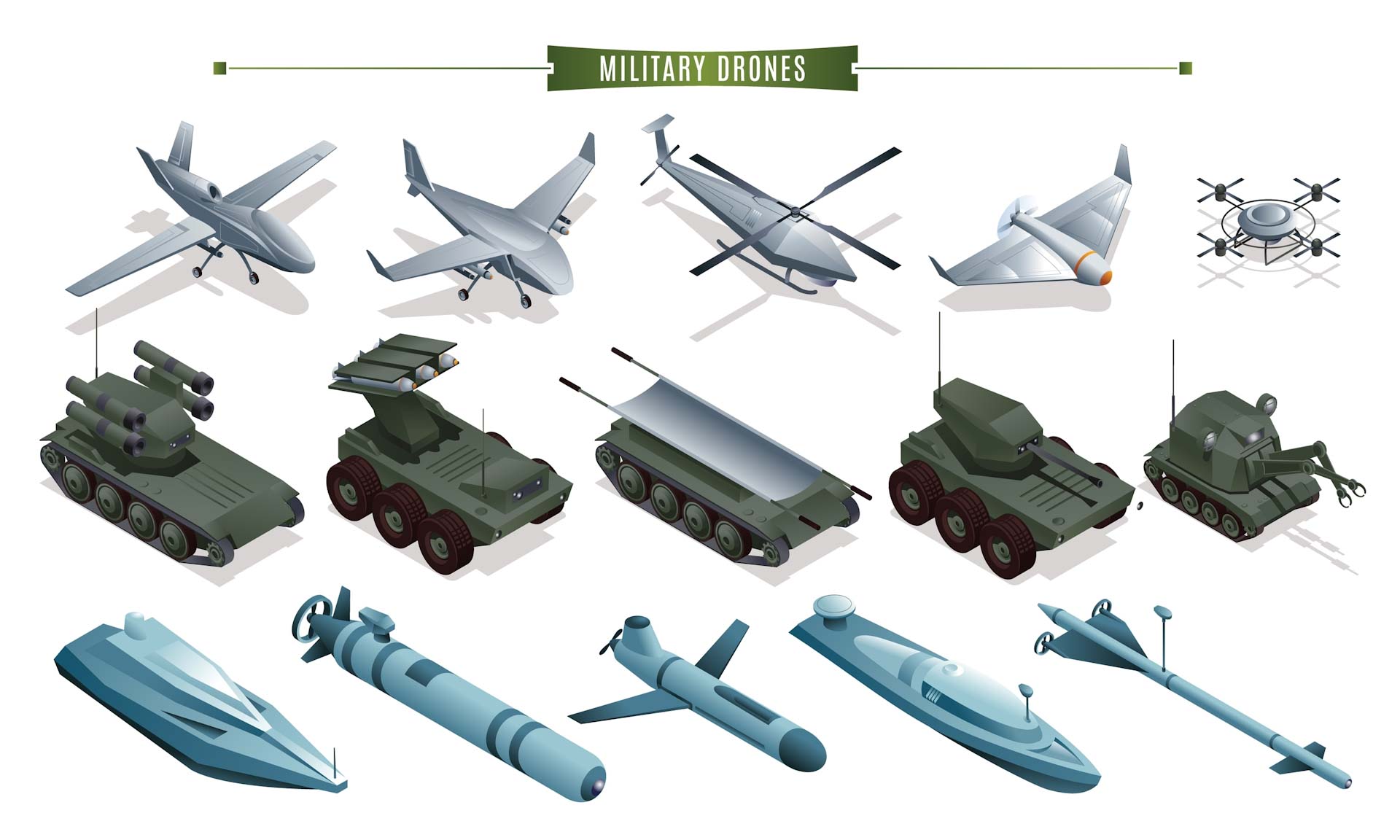
This synergy extends beyond the skies. Ground-based and maritime drones now crawl through rubble, navigate tunnels, and patrol the oceans. The gods of war have not vanished, they have evolved. No longer confined to myth or marble, they now reside in algorithms, optics, and new tactics. Athena’s wisdom is coded into targeting software; Tyr’s precision guides fiber-linked drones; Ares’ fury roars through rocket artillery; and Phobos lurks in the psychological shadow cast by machines that strike without warning or mercy. These are not metaphors; they are the operational realities of modern conflict. Victory in this new era will not be won by brute force alone, nor by technology in isolation.
Napoleon once declared, “God fights on the side with the best artillery.” Today, the gods of war fight on the side of those who understand the symphony of systems, who can orchestrate firepower, maneuver, and intelligence into a coherent whole, and then swiftly adapt the use of the new means. The right blend of drones and artillery offers the best of both worlds: the relentless pressure of attrition and the agility of maneuvering warfare. As warfare continues to evolve, so too must our understanding of it. Yet installing new technologies is the easy part. The real challenge lies in integrating them into a functioning system of systems. The new gods of war do not demand worship, they demand integration. Those who master this fusion will not only shape the outcome of battles but redefine the very nature of warfare. For any military doctrine based on deterrence, it is essential to demonstrate that the new nature of war, where Athena’s wisdom, Tyr’s precision, Ares’ fury, and Phobos’ psychological terror converge, is both understood and mastered.