

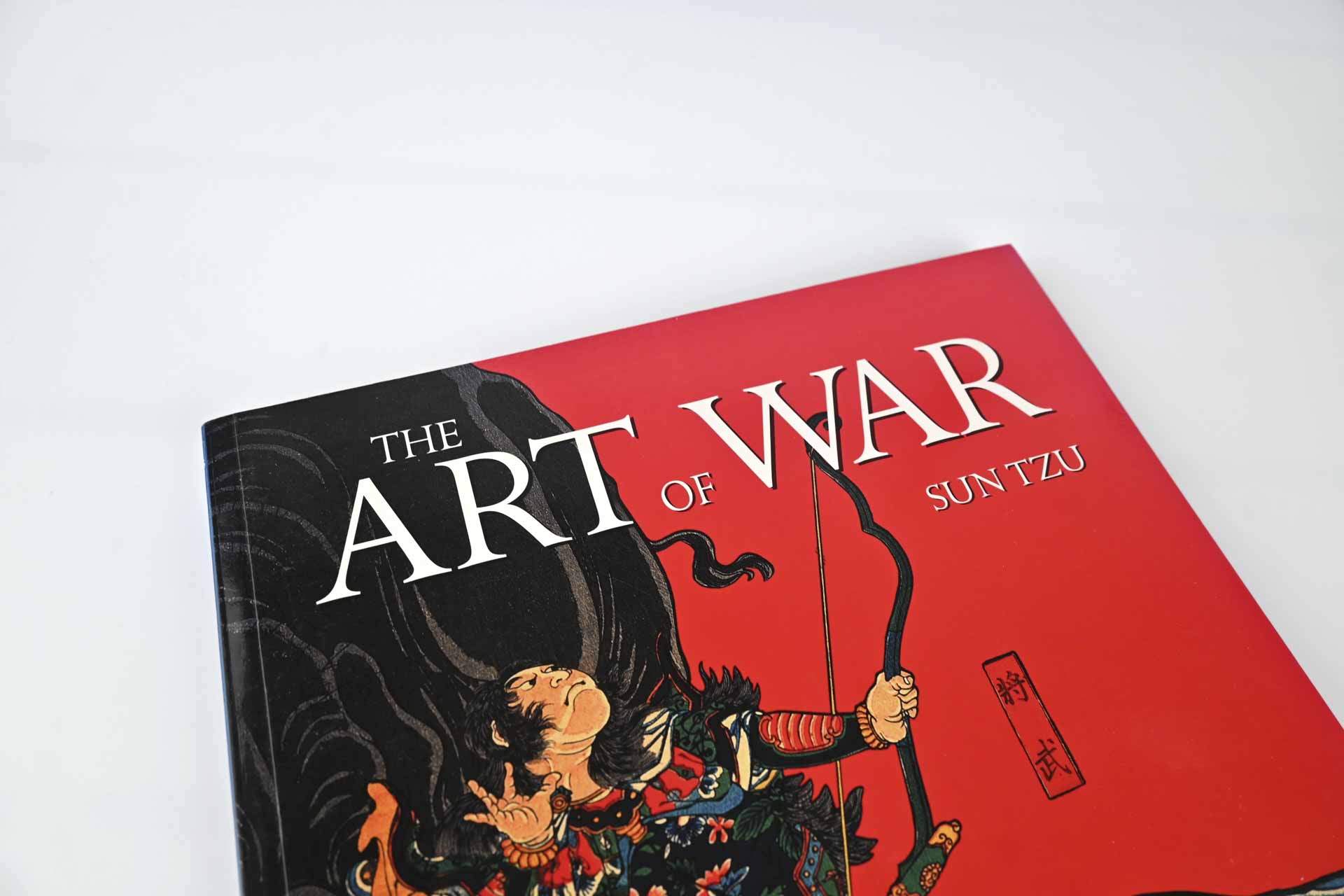
“Victorious warriors win first and then go to war, while defeated warriors go to war first and then seek to win.” – Sun Tzu
In conventional military doctrine, the assumption is that superior military capabilities and economic strength can be translated into strategic success. Yet the historical record repeatedly contradicts this expectation. In his analysis of 197 asymmetric conflicts between 1800 and 1998, Ivan Arreguín‑Toft (2001) found that weaker actors won nearly one-third of cases, with victories becoming more frequent after 1950. In the analysis of these conflicts, Arreguín‑Toft pointed out that the difference between the actor’s material power alone cannot be used as the decisive element. Arreguín‑Toft’s central insight is that outcomes in asymmetric conflict are shaped less by capability than by strategic interaction: how actors choose to fight, whether directly or indirectly, and how those choices interact over time. When strong and weak actors adopt opposing approaches, most commonly direct strategies by the strong and indirect strategies by the weak, material superiority is not converted into decisive victory. Instead, it is deflected into prolonged, politically and economically costly struggle. In conflicts since 1998, the period beyond Arreguín-Toft’s original analysis, the trend appears to have continued, with weaker actors increasingly able to exploit indirect strategies supported by geoeconomic instruments, drone technologies, and modern communication platforms.
This article extends that interactional logic into today’s conflict environment, where geoeconomic instruments and autonomous systems have reorganized how indirect strategies are applied and sustained. As direct strategies advantages seem to diminish, even strong actors will utilize more indirect strategies to achieve their strategic goals. This means that the conflicts in the modern world will be less direct military versus military but more of cost inflicting on the opponent to create political friction. This includes indirect strategies against the civilian population of the opponent, as either Guerrilla warfare, terrorism or barbarism activities but also different forms of geoeconomically tools that, over time, will have a suppressive effect on economical growth.
A foundational explanation for weak-actor success lies in interest asymmetry, first articulated by Andrew Mack (1975). Weak actors typically fight over existential stakes like regime survival, territorial control, or political autonomy. These interests impose clarity and discipline, objectives are narrow and unambiguous, and compromise is costly, often prohibitively so. Strong actors, by contrast, can afford to be engage in conflicts of choice rather than necessity. The reasons for strong actor’s engagement in conflicts of choice can be due to a broader strategic agendas or even symbolic reasons. It is the overall greater strength that allows the strong actor to be engaged in ambiguity in objectives, tolerate drift between goals, and redefine success over time. Strong actors may even call this strategic flexibility, but they gamble that this flexibility ends up a strategic liability instead. As conflicts protract, this asymmetry becomes increasingly consequential. Weak actors remain focused and committed to clearly defined ends, while strong actors grow more sensitive to rising costs and competing priorities. Over time, the strong actor’s advantage in capability is offset by declining tolerance for sustained effort, allowing the weaker side’s superior resolve to shape the trajectory of the conflict.
Interestingly asymmetry, however, does not by itself determine outcomes. Material superiority does not automatically translate into political resolution. As Arreguín-Toft demonstrates, the decisive variable is strategic interaction: how actors choose to fight, and how those choices combine and evolve over time. Political vulnerability rarely decides conflicts at the outset. Instead, it emerges progressively as duration increases. Conflict length is therefore not incidental but produced through interaction. Strategic choices that avoid decisive engagement and prolong contestation generate temporal conditions under which asymmetries in interest and resolve become consequential. In this sense, weak actors do not prevail by matching the strength of their opponents, but by shaping interaction in ways that extend time. By doing so, they shift the contest from one defined by material capability to one governed by endurance, where interest asymmetry and political vulnerability increasingly dominate outcomes. A good example of this is stated by General Võ Nguyên Giáp, a North Vietnamese commander during the Vietnam war, “Every day the war continued, the American antiwar movement was helping us. The people protesting in the streets of America were a vital part of our strategy.”
Arreguín‑Toft distinguishes between two ideal‑type strategic approaches:
Direct strategies seek a decisive end to the conflict by targeting an adversary’s capacity to fight. They emphasize direct defeat or neutralization of opposing forces, and rapid resolution through battle or containment.
Indirect strategies avoid an opponent’s strength and instead target will, production capacity, and political cohesion. The aim is to prolong the conflict by avoiding decisive confrontation and instead impose costs through disruption and delay. Guerrilla warfare remains the most familiar example. Arreguín-Toft also includes coercive violence against non-combatants, what he terms barbarism, as an indirect approach, though one that carries significant moral and political risks. Geoeconomic instruments also fall within this category.
Historically, when strong and weak actors adopt the same approach, direct‑direct or indirect‑indirect, material power tends to translate cleanly into outcomes. Interaction reinforces advantage, and the strong actor’s side typically prevails relatively quickly. When approaches diverge, most commonly with a direct‑strategy strong actor confronting an indirect‑strategy weak actor, superiority is deflected rather than contested. The strong actor’s power generates effort and expense without making decisions, while the weaker side converts survival into time and time into leverage. In Arreguín‑Toft’s dataset, strong actors won 76 percent of same‑approach conflicts, but weak actors prevailed in 63 percent of opposite‑approach encounters. These mismatched conflicts also lasted significantly longer. Time is the enabling mechanism. As duration increases, economic burden, domestic pressure, and political distraction accumulate. Interest asymmetry, initially latent, is activated. It is through this interactional extension, rather than parity of force, that indirect strategies transform endurance into advantage.
In contemporary conflict, there is an increase of the use of indirect strategy, from both the strong and the weak actor. Traditionally, strong actors have often fallen into the barbarism trap, while weaker actors have relied on guerrilla warfare. Elements of this dynamic can be observed in contemporary conflicts in both Ukraine and the Middle East. Civil wars are particularly susceptible to both forms of indirect strategy, with civilian populations bearing much of the human cost. Historically, coercion directed against civilians has rarely produced lasting political solutions. A comparison between the American Civil War (1861-1865) and the Russian Civil War (1917-1922) illustrates this dynamic. While violence against civilians occurred in both conflicts, the Russian Civil War was characterised by substantially greater brutality directed at civilian populations. The extensive use of coercion created effects beyond the immediate military sphere. Violence directed at civilians did not simply impose costs on opponents; it also shaped perceptions of legitimacy and influenced the prospects for post-conflict political consolidation. The strategic problem is that coercion against civilians often produces second-order effects that are difficult to control. Fear may encourage short-term compliance, but it can simultaneously generate resentment, strengthen collective resistance, and embed grievances that persist long after the fighting ends. While brutal measures may generate short-term compliance, they frequently deepen resistance, strengthen grievances, and complicate post-conflict stabilisation. Barbarism therefore carries a strategic paradox, actions intended to weaken an opponent’s resolve may instead reinforce it while simultaneously eroding the legitimacy of the actor employing them.
The significant contemporary development in this is the added and increasing use of geoeconomic instruments as a complement, primarily from the strong actor’s point of view. Geoeconomic tools such as sanctions, export controls, financial restrictions, investment screening, regulatory barriers, and control over standards and key economic chokepoints enable states to exert pressure without direct confrontation. These instruments do not target an adversary’s immediate fighting capacity, but rather its economic sustainability, elite cohesion, and societal tolerance for prolonged contestation. They operate through the gradual suppression of economic growth, constraining the adversary’s long-term ability to sustain conflict.
Strong actors’ usage of geoeconomic tools as indirect strategies has increased the last few decades. These tools are often sanctions against a certain country including individuals who are key decision-makers. Furthermore, countries use freezing monetary assets and limiting access to international banking systems as sanctions. Another geoeconomic instrument that appears to be on the rise is the use of trade restrictions like export ban on both material and technologies. The overall effect from sanctions is to suppress technology development and economic growth. If these sanctions are active over time, the compounding effect will create a wider difference in economical development. The long-term U.S. sanctions regime against Cuba illustrates both the intended and unintended effects of geoeconomic pressure. While sanctions have contributed to limiting economic growth and access to technology, domestic policy choices, institutional factors, and the collapse of the Soviet bloc have also played important roles in shaping Cuba’s economic trajectory. The negative effect, for the strong actor of using geoeconomic tools like sanctions is the administrative burden including monitoring and coordination of the sanction, that will result in a cost on the own side. A side effect of sanctions is that as markets adapt faster than regulatory systems, and informal networks substitute for disrupted channels. Smuggling have always been a response to sanctions and trade restrictions.
For weaker actors, geoeconomic tools provide a means of scaling indirectness without matching military power. For a weak actor, the harassment or disruption of trade routes is among the most effective indirect geoeconomic instruments in contemporary conflict. Its strategic purpose is rarely to halt commerce outright. Instead, it is to introduce uncertainty and delays or even disruptions. The goal is to create costly friction. Even limited disruption can trigger precautionary rerouting, slower transit speeds, elevated insurance premiums, port congestion, and contractual disputes. These second‑order effects cascade across supply chains, magnifying the impact of relatively modest actions. Control of the route is unnecessary; rendering it unreliable from the perspective of commercial stakeholders is sufficient. Contemporary examples of this are found in the Houthi rebel’s control of the south Red Sea and the Iran’s control of the strait of Hormuz. Historical precedents are extensive.
The response to the harassment or disruption of trade routes becomes a strategic burden for the stronger actor. Global trade operates on compressed timelines and narrow margins. When reliability fades away, political and economic pressure mounts quickly from domestic constituencies, commercial partners, and allied states. Restoring confidence requires continuous deployment, surveillance, coordination, and reassurance. Capability superiority is thus converted into ongoing expenditure of resources and attention, rather than decisive outcomes. A modern example of this is the international coalition to defend the global merchant fleet against the threats from Somali-based piracy networks over the last decades.
This interaction reproduces the classic logic of strategic mismatch. Low‑cost provocation imposes high‑cost response. Each episode of disruption forces the strong actor to demonstrate presence and control, while the weaker actor need only persist intermittently to sustain uncertainty. Over time, the contest shifts away from the physical security of sea lines of communication toward the political sustainability of maintaining them. Autonomous systems significantly amplify this dynamic. Cheap and unmanned systems reduce the marginal cost of persistence and at the same time enable ambiguity and deniability (from the perpetrators point of view) and thereby sustain a background level of risk sufficient to alter commercial behaviour. The value of autonomous systems lies not in decisive attacks, but in maintaining a continuous condition of contestation. For shipping firms, insurers, and ports, occasional disruption is manageable; chronic unpredictability is not.
Arreguín‑Toft’s interactional logic remains fully applicable in the twenty‑first century, but autonomous systems alter the scale and tempo of indirect strategies, but also the ability to sustain this strategy over time. Autonomous systems lower the threshold for indirect action. Cheap and increasingly autonomous capabilities enable persistent harassment and disruption at minimal marginal cost and limited risk. Indirect strategies operate by extending time and exposing civilian systems to sustained pressure, thereby eroding political coherence at the strategic level. Geoeconomic instruments and autonomous systems represent contemporary means of achieving this effect. They should be understood alongside a more traditional, and more extreme, method: coercive violence against civilians. Across these approaches, a common logic emerges. Geoeconomic pressure, autonomous disruption, and direct coercion all function as transmission mechanisms through which material power is translated into political effect.
Within the state, these instruments are embedded in different institutional domains. Military force has historically been the primary tool of coercion, directed against both military and civilian targets. Autonomous systems modify this role. The losses of drones are politically much cheaper than loss of soldiers or civilians’ lives. This lowers the thresholds for using low-cost disruption or continuous harassment of both trade routes and civilians’ population. At the same time, technological change has altered the political context in which such strategies operate. This is due to that advancement in different digital communication platforms which simplifies information sharing and thereby also increases the need for controlling the digital narrative around a conflict. The modern thing here is that this control over the conflict narrative can be achieved in real time and globally. This facilitates the exploitation of political vulnerabilities in the target country by shaping international perception and contesting legitimacy. The current information war surrounding the conflict in Gaza and the wider Israeli/Palestinian conflict, is a good example of this method. Digital communication platforms have transformed indirect strategy by reducing the time between events and political reaction. Narratives can now be contested globally and in real time. Information operations therefore serve the same strategic purpose as geoeconomic pressure and autonomous systems; they convert tactical events into political effects. Basically, an actor can control the “right” narrative for a conflict, even if the conflict still is in the future, and thereby justify its potential future behaviour, whenever that may be needed.
This transformation raises the political cost of military participation in indirect strategies. Civilian exposure, once a secondary effect, now becomes highly visible and politically consequential. As a result, strong actors face increasing constraints on the use of direct force, pushing them toward greater reliance on geoeconomic tools, often supported by autonomous systems. This shift affects both strong and weak actors, redistributing advantages and redefining how power is applied.
The result is not the disappearance of material superiority, but its transformation. Power is no longer applied primarily to deciding conflicts quickly, but to managing them over time. In this environment, the central question is not who possesses greater capability, but who can sustain interaction on politically acceptable terms. This returns us to the starting point. As Sun Tzu observed, victory depends not only on strength, but on how and when it is applied. In contemporary conflict, strength increasingly operates under conditions that prevent decisive use. When superior power is absorbed into prolonged, indirect interaction, it ceases to produce clear outcomes. Instead, it generates cost and delay which also leads to an increased risk of exposure which increases political exposure and accelerates vulnerability. In that sense, strength does not fail. It is reconfigured by strategic interaction and, when misapplied, becomes the very condition of its own limitation. The world is heading towards a period with more and longer conflicts where both sides utilise different indirect strategies, as direct strategies carries more risks than before. This may increase incentives for use of Guerrilla warfare, terrorism or barbarism activities, as a complement to the geoeconomic tools. All of this is driven by the interest asymmetry between an increasing number of actors which all benefits from reduction of marginal cost for using tools in indirect strategies in cold warfare.
The author is Professor at the University of Borås and Professor at the Swedish Defence University.
References
Mack, A. (1975), “Why Big Nations Lose Small Wars: The Politics of Asymmetric Conflict”. World Politics, Vol. 27, No. 2, pp. 175-200
Acknowledgment
Key concepts, definitions, and empirical findings regarding strategic interaction, direct/indirect approaches, opposite‑ vs. same‑approach outcomes, and the role of time and political vulnerability are adapted from:
Arreguín‑Toft, I. (2001), “How the Weak Win Wars: A Theory of Asymmetric Conflict,” International Security, Vol. 26, No. 1, pp. 93–128.