

Only a week after the high-prestige NATO summit in Ankara – with important (if mixed) consequences for the Alliance as well as for Turkey’s strong-man leader since decades, President Recep Tayyip Erdogan – it was time for yet another event in Ankara and elsewhere in the 85 million country, the celebration of the commemoration of the July 15, 2016, attempted coup, an event with major consequences for the development of today’s Turkey. If Erdogan’s acting as the host of a NATO summit, with Donald Trump as special guest of honor, in times of great security concerns and great security needs, could be described in terms of a peak after years of efforts to define and find a relevant international role, remembering the July 15 event serves as a reminder of what it took, and still takes, for Turkey to arrive at some stability and harmony in its nation- and state-building process, although at great democratic cost.
In view of the current host of uncertainties pertaining to NATO (some these days follow war secretary Hegseth in talking about “NATO 3.0” with reference to shifting transatlantic balances), the Ankara summit, like last year’s Hague summit, was anticipated with realistic concerns; would Trump even at all participate, and if so, would acrimonious debates over Hormuz and over defense spending overshadow necessary united decisions concerning joint support for Ukraine’s war of survival against continued Russian aggression?
To the great relief of secretary general Mark Rutte and all other friends of NATO trying to excel in the art of Trump management, the summit did produce a concluding communique, a brief one like last year but one that summarized in 6 points the current transatlantic essentials and necessities: the mention of the Alliance’s “ironclad” commitment to collective defense under Article 5 of the Washington Treaty, the readiness to deliver on last year’s commitment to face the “long-term” and persistent threat posed by Russia (and terrorism) by enhanced defense spending, the readiness to build a stronger, modernized Alliance in which Europeans and Canadians assume greater responsibility (“NATO 3.0”?), a statement that “the Allies stand united in /its/ unwavering support for Ukraine in defending its freedom, sovereignty and territorial integrity”, reiterating that “Iran must never have a nuclear weapon”, calling on Iran to “fully respect” freedom of navigation in the Strait of Hormuz, and thanking Turkey for its generous hospitality as summit hosts. I.e., an exercise in diplomatic compromise on thorny issues, saving the day, for now, for the Alliance.
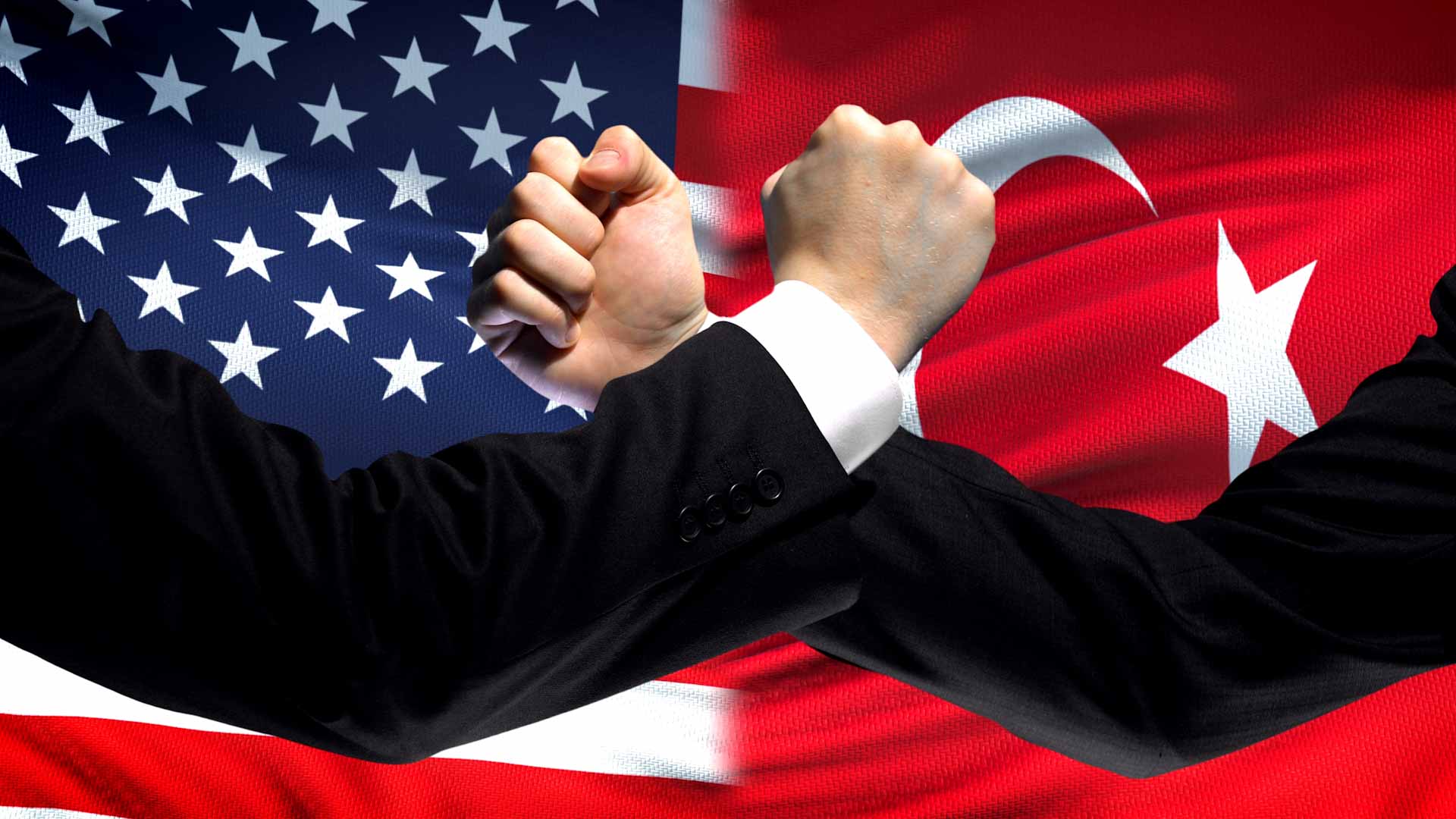
This was all fine for the summit host, President Erdogan, but even better was the way the summit manifested a peak in US-Turkey relations, a fragile peak but still a peak. It began with Donald Trump causing concern in NATO headquarters and elsewhere by stating that had it not been for his personal friendship with and respect for the summit host, President Erdogan, he would/might not have attended the summit at all, causing Erdogan to show up personally at the airport to receive his guest of honor, a first in a series of mutual pleasantries throughout. In addition, Trump had promised beforehand to bring with him things that would make Erdogan “very happy”, referring to Turkish expectations of the US finally lifting sanctions over the Turkish purchase of Russian S-400 air defense systems, reinviting Turkey to be part of the F-35 aircraft program and allowing Turkey to purchase a US engine for its own KAAN aircraft needs. The fact that US and Trump pledges on these industrial matters proved to be somewhat less concrete than Turks had hoped for – Congress resistance obviously remaining a problem even for all-mighty Trump – does little to reduce the notion of the Ankara summit being a peak in US-Turkey relations, after a long period of complications and distress.
And this is what makes the reminder, 10 years after, of how things were back then so drastically relevant and topical. For the domestic drama then was also a bottom line in US-Turkish relations.
A brief reminder of what happened that day, or rather that night, the event that had a background history and had dire consequences, even for today.
The official account of what happened being essential part and parcel of the Erdogan regime’s claims to legitimacy, it is even today, 10 years after, very difficult for alternatives narratives to be heard. This means that it can be doubted that in any and all of the articles and analyses that are likely to be produced, in Turkey and internationally, on the occasion of the anniversary there will appear embarrassing revelations challenging the official narrative, the latter instead being further hammered out in the celebrations. So probably, therefore, nothing new on the themes of who participated, and why, and whether the Erdogan regime was tipped off, e.g. by Putin’s Russia, and whether the regime, being forewarned, allowed the coup attempt to proceed as a means to crush the opposition.
After all, Erdogan was quoted the day after to maintain that the coup attempt was a “gift of God”. And after all, the event did facilitate for the Erdogan regime to launch during the months and years to follow a uniquely comprehensive purge of perceived opponents, initially targeting mainly suspected “gulenists” (the former comrade-in-arms within the family of Turkish Sunni against the joint Kemalist enemy), but gradually broadening targeting to encompass all sorts of perceived enemies. The uniqueness of the purge (under a state of emergency) referred both to the number of people affected, generals, cadets, businesspeople, academics, journalists, etc, etc, and the draconian nature of punishments imposed, or threatened. This is all a long – and sad – story, and one that forms the basis of the general trends towards authoritarianism in Turkish politics under Erdogan. For even today, new imprisonments (e.g., the most famous case Ekrem Imamoglu, the ousted and imprisoned mayor of Istanbul) add to long-standing cases and the continued absence of sanctions lifting to compound a system of un-free authoritarianism.
So while the background to and participation in (and function of) the July 15, 2026, coup attempt may still be contested, for all the might of the official narrative and given the deep ambivalence affecting the general Turkish public in its attitude to the event and its follow-up, it remains uncontested that the consequences represented a via dolorosa for Turkish democracy; the purge, the referendum under state of emergency on a new, presidential system, gradual expansion of presidential power into state, municipal, civil society, academia, etc, and electoral turbulence.
But in all this there have been parallel developments in US-Turkey relations, reflecting trends in both countries. If there is peak now, there was crisis at the time of the coup attempt 1o years ago.
Remember the wider context. That year, 2016, was when the Syrian crisis had hit Turkey hard, both in terms flows of refugees (affecting Turkey-EU relations) and in terms of a series of serious terrorist attacks affecting Turkish soil. It was the year when there was crisis in the Turkey-Russia relations following first Russia’s entry into the Syrian civil war and then Turkey shooting down a Russian SU 24. It was also the year affected by the Obama administration’s decision to enter the war against ISIS and hence to militarily cooperate with the Kurdish YPG militia. And the year when Turkey was busy dealing with problematic relations with its ARAB MENA neighbors. This and much more during a strangely strained year, for Turkey and many others. And with a range of factors severely complicating US-Turkey relations, at a time when US Congress evaluations of the state of affairs in Turkish domestic policies and democratic standards did matter in foreign policy circles.
The attempted coup thus occurred in a vexed atmosphere of mutual political suspiciousness. Joe Biden, then vice president, was the first US envoy to experience official Turkish suspicions that the CIA was in fact involved, somehow, in the “attack against Turkish democracy” as team Erdogan sought to describe it. His stormy visit coincided roughly with Erdogan paying a first visit abroad to Putin in St Petersburg and with the Turkish army launching a first military incursion against the YPG in Syria. And then the Turkish decision to purchase Russian S-400 batteries, and then the US punitive measures following this, and added complicators, not least during Trump’s first mandate, even though Trump did greenlight a second Turkish incursion into Syria, causing key officials (e.g., defense secretary Mattis) to resign and president Macron of France to talk about the “brain death” of NATO.
So we are talking here about quite a long journey during these 10 years, as celebrated in Ankara one week after the NATO summit. While Erdogan may now be rejoicing triumphantly at the vaste improvement throughout these years in Turkey’s international standing and the closeness between him and friend Trump in a turbulent world affairs context, he probably also realizes that even if he, Erdogan, is there “for ever” to rule Turkey, powerful friends, like Trump, can hardly be trusted as personal guarantors of Turkey’s various needs and aspirations, and are hardly likely to remain, “for ever”.