

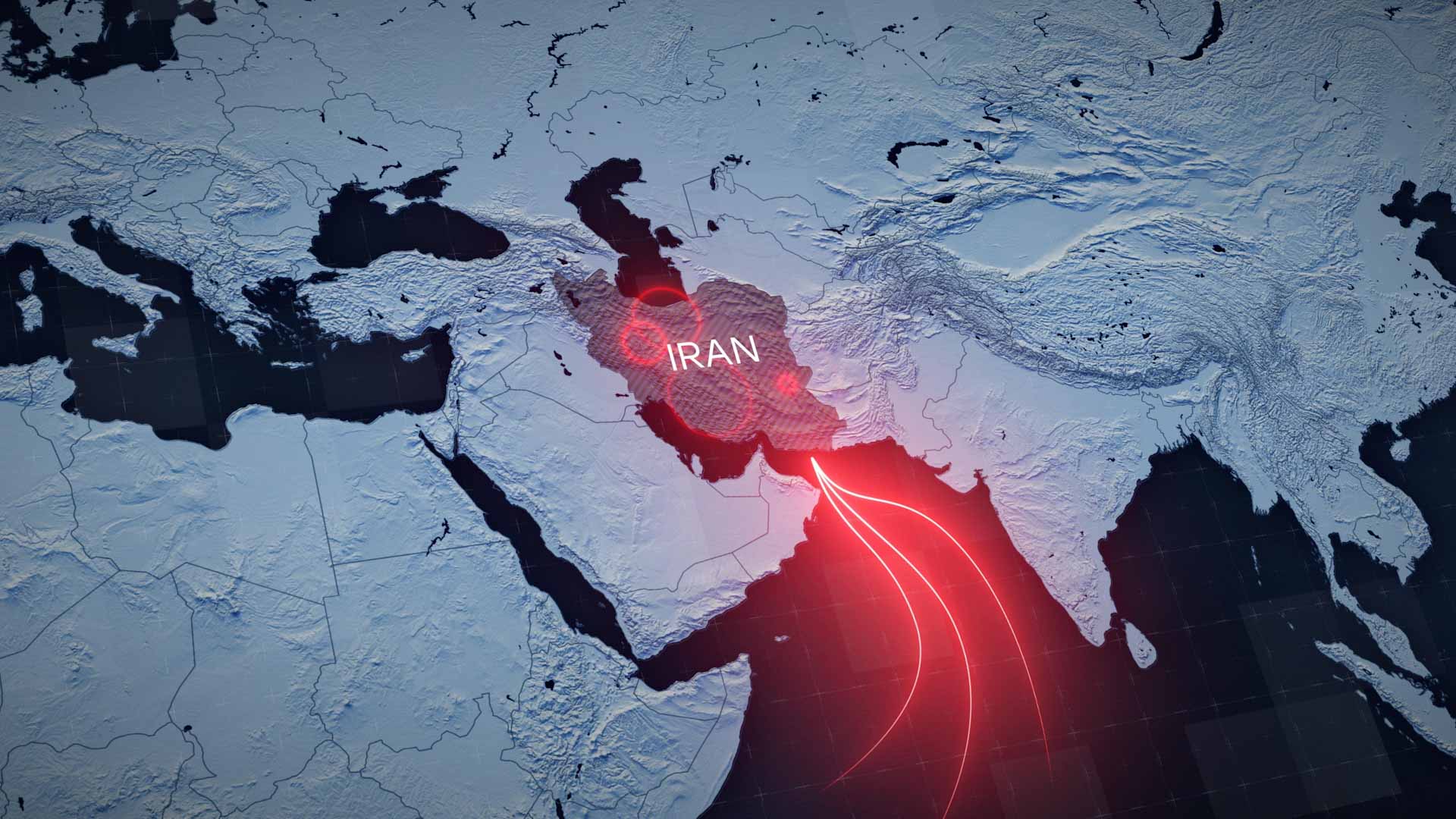
At the point of writing, the whole world is asking, not without great anxiety, how long the current US-Israel-Iran war will last, anxiety because of the immense global effects this war has already proved to entail, and the longer the duration the more immense the effects. Eight weeks so far, and an agreed ceasefire in operation, extraordinarily fragile, yes, but still a ceasefire, giving the parties some pause for reflection as to available options, escalation or de-escalation, total victory or negotiated compromise, and within the prospect of resumed war, for Iran seeking quickest possible recovery from war losses and restoration of retaliation capacities, for the US (and Israel) using the ceasefire for the purposes of enhancing military deterrence and of updating targeting for a possible next round of bombardments. A duel of sorts, pending the outcome of current indirect talks and eventual, possible direct negotiations. All these with the Hormuz strait military diplomacy at the focus of world attention.
So how long will – or can – this last? It seems we are dealing here with a paradox characteristic of our time: the more difficult the conflict issues, the more difficult their disentanglement in a ceasefire- or peace process and the more protracted therefore this process, regardless of final outcome, but also the more harmful and painful this protraction.
Take as an example the case of Israel-Palestine, i.e., the issue of a two-state solution and the creation of a Palestinian state. An overwhelming global majority would agree that a “solution” in this conflict-ridden area can only be a political solution, and that the two-state solution is the only available/possible political solution. But since Israel, so far with quasi-unconditional US/Trump support, not only actively argues against this outcome but nowadays even actively acts against it (e.g. by de facto annexation of the West Bank), the resulting paradox seems to be that the two-state solution was never as indispensable as now (given the Gaza catastrophe, et al), yet never as impossible as now, given Israel’s veto power, et al, at least under the current Netanyahu circumstances. The grim alternative to a, or the, political solution, of course is “forever wars” in the region. Or, perhaps, if the US (under whatever government) and the world were to allow Israel (under whatever government) to seek and achieve “total victory” over its several enemies.
Is there, then, a real risk for the current Iran war to turn into a “forever war”, in stark contrast to the successful Trump campaign pledge never again to engage in a “forever war” overseas, and thus in comparison with the other long and large wars of our time, whether intra- (as in Sudan) or in inter-state, as in the Israel-Palestine-Lebanon case and in the case of Russia-Ukraine?
Who could have imagined, by April 15, 2023, that the Sudanese civil war that broke out that day would by end of April 2026, after three full years of increasing humanitarian disaster, be still ongoing, still without any end in sight, still without even a ceasefire to allow for humanitarian rescue? Who could have predicted that in this sad case of international inaction now entering its fourth year the regional dynamics of war prolongation would have weighed heavier than rational peace making?
And who could have imagined, on October 6 2023, that an Hamas terror attack and the ensuing Israeli war of retaliation would mean, by late April 2026, that Israel would still be involved in chain of connected wars with strategic direction south (Gaza/Hamas), north (Lebanon/Hezbollah), east (Iran and Iran proxies in Syria and Iraq) and south-east (Yemen/Houthis), contiguous wars intertwined with fragile ceasefires, still with no lasting end in sight?
And who could have imagined, by, say, February 25 2022, that even after well over four years of full-scale war between the Russian aggressor and the Ukrainian defender this war would be not only still ongoing but also with increasing international difficulties as regards prediction of a possible end to the deadly conflict?
So the conclusion, one conclusion of this comparison – before comparison is broadened to include the case of Iran – is that in the current state of affairs in international wars, including large wars between states, cannot be prevented from breaking out, and once they do these wars seem to be utterly difficult to end, even to bring to much, much needed ceasefire (for humanitarian rescue and other purposes, and in cases where ceasefires are painstakingly arrived at these are hardly distinguishable from full, continued warfighting. International peace diplomacy is struggling in an uphill battle, these days. “Forever wars” seem to be the order of the day – with the US under the auspices of Donald Trump playing a paradoxical part in this scheme, both in stark contrast to and in pursuance of the “no-more-forever-wars” Trump campaign pledges.
So what about prospects for the Iran war, the current phase added to the massive but short US-Israeli attacks last year, the “Twelve day war” of June 2025? Could it also become a several-year protracted war, thus comparable with the cases of Sudan, Israel-vs-enemies and Ukraine, in spite of all indicators to the effect that this would seem to be unthinkable, given the stakes involved for (almost) all players and the global implications already now demonstrated?
One short first answer to this daring question is, perhaps, Yes, it could, if (a big IF) difficulties in finding a mutually tolerable negotiated off-ramp prove to be insurmountable, such that the US (and Israel) decides, again, to break the ceasefire (perhaps after a series of armed incidents and mutual recriminations) and to seek “total” military victory, only to find that this step, and Iran’s response in terms of hardened resilience and retained but adapted retaliatory capacity, leads on to a protractable war with totally unpredictable consequences, regionally and globally. Even if that protracted war is interrupted back and forth by periods of shaky ceasefires.
It is not difficult to argue the case that this outlook is something that both the US (with or without the company of Netanyahu’s Israel) and Iran genuinely and credibly wish to avoid, Iran because of the destruction caused by both last year’s and the current US-Israeli attacks, Trump’s US because of the untenable situation caused by his “war of choice” and his unconvincing case in defense of the war. But in order to avoid a protracted quagmire – of exactly the kind that Trump pledged to avoid (and interrupt, respectively) and if a “total” military victory remains unlikely, a negotiated settlement, no matter how hard, has to be found. A tough nut to crack, for mortal enemies with zero trust, but with energetic assistance of Pakistani-led international diplomacy.
So can there be compromise, if compromise is at all thinkable between parties where the one has already claimed “victory” on all accounts and politically (for basic credibility) needs to substantiate this claim, and where the other will claim “victory” in terms of regime and national “survival” and has found closing the Hormuz strait to be a superb counter-move to offset the military imbalance? And where “the one” (Trump) – in spite of the further damage demonstrably affecting the international markets – has countered with blocking any and all Iranian-bound ship from entering or exiting Iranian ports, as an act of economic warfare during the military ceasefire offered.
Currently, at the time of writing, there seems to be a stand-still in direct talks between the US and Iran, in spite of mediating efforts frantically seeking to fill the void. Perhaps we shall in the days to come see some moves “on the ground”, with mutual attacks on, or arrests of, break-out vessels, including pledged US attacks on Iranian speed boats and mining vessels. And meanwhile comprehensive discussions are held, notably in Europe as a result of bitter Trump complaints at lacking European enthusiasm to render military support for dealing with the consequences of Trump’s war, over a possible post-war regime of keeping Hormuz permanently open. Meanwhile, too, the Iranians and their de facto allies Houthis in Yemen seem to be preparing another countermove, the closure of the Bab al-Mandab strait into the Red Sea, with added dire consequences for world markets, and Saudi oil exports.
So can there be US-Iranian (and Israeli!) compromise, as a means to avert overwhelmingly difficult consequences of continued or resumed war?
In other words, what does team Trump need at a minimum to be able to declare victory and case closed, if he cannot, because of his underestimation of Iran’s resilience and staying power, have it all, as boasted throughout the conflict? And if “boots on the ground” – e.g. for the purposes of going after and carrying away Iran’s 450 kilos of 60% enriched uranium – are in principle and in practice unthinkable? And if having Iran agree to dismantling its 50% or so surviving arsenals of missiles and drones (according to US intelligence) remains unattainable, in spite of Israel’s insistence to the contrary? And if, similarly, it seems unattainable to bring Iran’s to agree on enrichment capacity to anything much over and above what was agreed in Obama’s JCPOA in 2015, without war, and tentatively agreed in the Oman-mediated talks preceding the current war?
If the answer here is that a tolerable deal, now, as a precondition at least for a permanent ceasefire arrangement and hence for a compromise om Hormuz, must – for Trump – include an entry on Iran’s non-acquisition of nuclear weapons, presentable as a significant step ahead of Obama’s JCPOA, then the question remains what will or could be in the compromise for the Iranian side: Sanctions relief? De-freezing of Iranian financial assets abroad? Some kind of binding non-aggression agreement? Including Israel? Impossible to assess now.
Everyone realizes that these are huge, and hugely complex questions, that normally takes years to negotiate. But in the current situation, created by Trump’s and Netanyahu’s war of choice and Iran’s response, time is of essence, globally, and politically in the US. Already now experts are warning that the war around the Persian Gulf is costing the world, every day, and that the crisis could, if protracted, lead to an unprecedented global financial crisis.
So who blinks first? A settlement, primarily on Hormuz, is clearly a must. But, again, the more pressing the must, the harder it could be to find the compromise, as per the paradox above. The next few days and weeks, and months and years, will be interesting to follow. The worst case is that the Iran war will be resumed and then lead to it, in spite of any rational calculus, becoming one more protracted war, and one deemed unnecessary by future historians.