

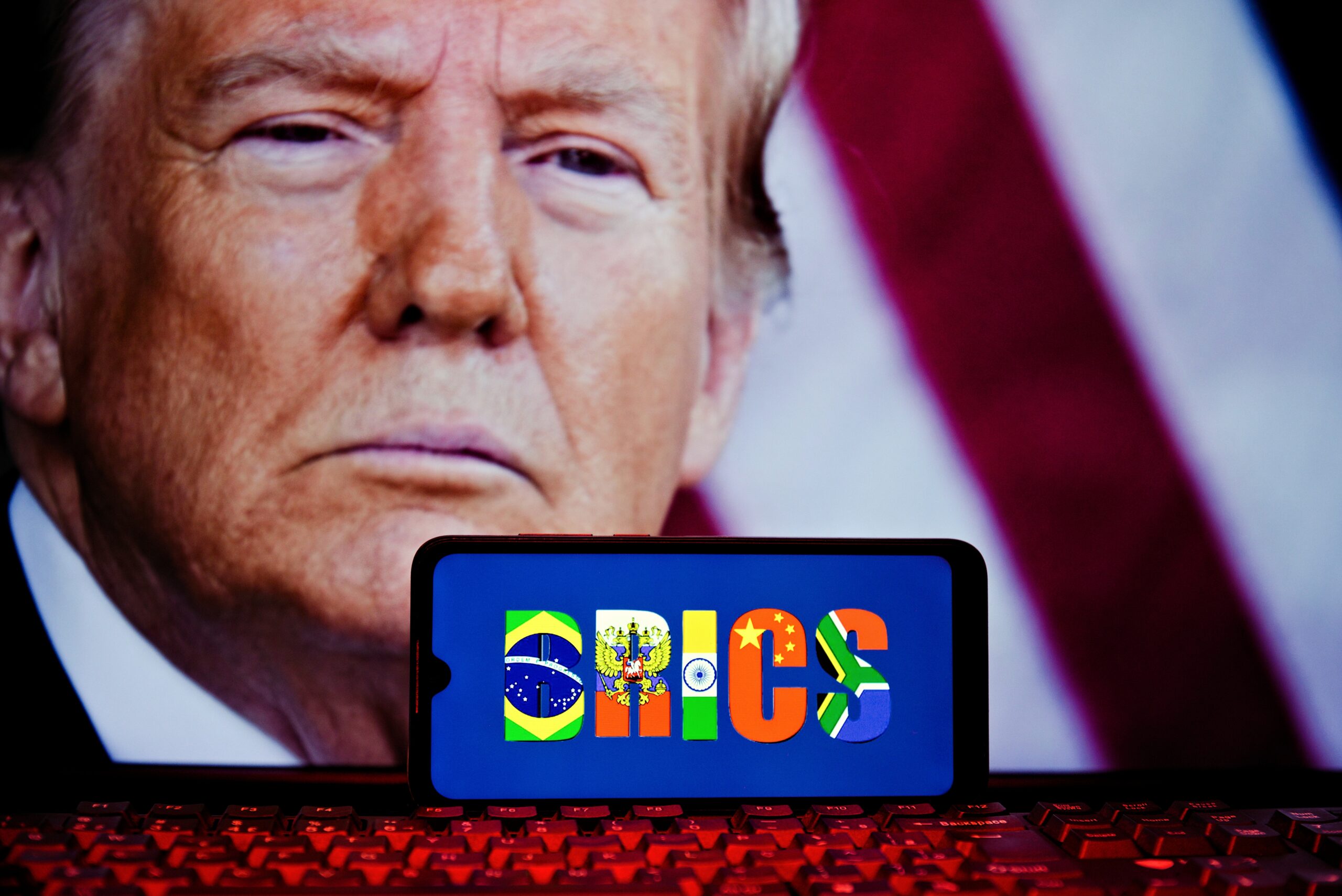
Ever since the Vietnam War, the issue of power has emerged in one context after the other. To what extent can a world power impose its will on smaller actors? In a string of conflicts in places such as Vietnam, Iraq, Iran and, of course, Afghanistan, the United States has seen itself being entangled in drawn-out efforts to come to results through sometimes very escalated military engagements.
President Trump, ahead of his second term, saw himself working differently, avoiding military engagement as much as possible abroad, and focusing on transactional power projection, not least through tariffs and different kinds of pressures on countries not behaving in a way which he considered to be the US interest.
The debate is on-going to what extent President Trump is actually succeeding in the seven cases of international conflict where he argues that he is playing a major role in getting to peace.
Two other specific cases are of particular interest because they concern not smaller actors, but indeed world powers, two of the key members of the BRICS family, Brazil, and India, which are in different aspects not behaving in line with the declared interests of President Trump.
- In the Brazilian case, it has very much to do with the trial against former President Bolsonaro.
- In India, it has mainly to do with the sale of Russian oil to India, which has increased dramatically since the beginning of the full-scale invasion of Ukraine in 2022.
The initial picture was simple and rather straightforward. Brazil was threatened with 50% tariffs in connection with Bolsonaro’s trial.
India confronted similar tariff levels primarily for the Russian oil purchases.
From the start, it was very unclear, however, what these pressures from the US side would lead to. And the picture is by no means clear yet. But one can observe that the countermeasures undertaken by the countries in question are extensive and to a certain extent effective.
Both states have successfully leveraged BRICS partnerships and have sought to develop alternative financial mechanisms to counteract US pressure.
India has done so from the position of being a larger and more strategic power than Brazil, giving it greater negotiating leverage.
The jury is out regarding the net result of US actions. And there is an additional factor influencing this assessment, namely pride. Political scientists have long tried to understand what the net result is of, for instance, sanctions imposed by larger states on smaller ones. They have observed that in many cases pressure on a country like Vietnam, for instance, often catalyzes political internal strength in the targeted country, making it possible to withstand pressure.
In the Indian case, this is particularly clear, where a string of statements have been published by not least the Indian foreign secretary, but also by President Modi, that India is a proud and independent nation, not bowing to external pressure. Its independence gained from the UK in the end of the 40s has established a very strong national pride in India, which is not easily disregarded even by the world’s greatest power. So when President Trump, for instance, asserts that he has played a role in the conflict between India and Pakistan, this is vehemently denied from the Indian side.
Details:
Brazil
The US government has indeed imposed 50% tariffs on Brazilian imports and sanctioned Supreme Court Justice Alexandre de Moraes under the Global Magnitsky Act. Treasury Secretary Scott Bessent announced these sanctions on July 30, 2025, citing “serious human rights abuses” and describing de Moraes as having “taken it upon himself to be judge and jury in an unlawful witch hunt”.
The tariffs were explicitly linked to what President Trump called a “witch hunt” against former President Jair Bolsonaro, who was sentenced to 27 years in prison on September 11, 2025, for attempting a coup after losing the 2022 election. Brazil’s President Lula da Silva has firmly rejected US pressure, stating in a New York Times op-ed that “Brazil’s democracy and sovereignty are not on the table”.
India
The US imposed 50% tariffs on Indian goods in August 2025, comprising a 25% “reciprocal” tariff plus an additional 25% penalty for Russian oil purchases. This represents the most severe trade action against India in decades, with Commerce Secretary Howard Lutnick demanding that India “stop buying Russian oil, distance itself from BRICS, and support the US”.
India’s oil imports from Russia increased dramatically from approximately 1-2% before the Ukraine war to around 40% currently, as confirmed by multiple sources. Finance Minister Nirmala Sitharaman stated India will continue purchasing Russian oil as long as it remains cost-effective.
Diversification of Dependence
What the US needs to take into account is, against this background, that both states are in the process of diversifying their dependence not only on the United States but also on imports and payment systems, including dependence on the dollar.
Negotiations on creating an exclusive payment system for BRICS nations have made progress, according to the final statement from the group’s recent meeting of finance ministers and central bank governors. The initiative seeks to enable transactions without converting to the US dollar, encouraging the use of local currencies within the bloc.
The Central Bank of Brazil prepared a comprehensive report titled “BRICS Cross-border Payment System”, outlining the group’s preferences for “fast, low-cost, more accessible, efficient, transparent and secure cross-border payments”.
The Reserve Bank of India has approved 156 Special Rupee Vostro Accounts with 26 Indian banks, facilitating trade settlements in rupees with BRICS partners. This system enables up to $100 billion in annual rupee-based trade flows, representing a potential 10-15% shift away from dollar-denominated transactions.
Under the new system, exporters and importers from BRICS countries can settle their trade using rupees through dedicated Vostro accounts without requiring prior approval.
Chinese investment in Brazil reached $4.18 billion in 2024, representing a 113% increase from 2023 and making Brazil the leading emerging market destination for Chinese capital. This investment spans 39 projects, with 34% concentrated in renewable energy and 25% in oil and gas sectors.
US Mitigating Action
A significant thaw occurred in September 2025 when President Trump called Prime Minister Modi on his 75th birthday, marking their first conversation since June. Trump praised Modi’s “tremendous job” and expressed optimism about trade negotiations, while Modi reciprocated by referring to Trump as a “friend”.
US trade representative Brendan Lynch subsequently held “positive and forward-looking” discussions with Indian officials in New Delhi, with both sides agreeing to “intensify efforts to achieve early conclusion of a mutually beneficial Trade Agreement”.
Assessment of Effectiveness of US Pressures
- Despite targeting $40 billion in annual US exports, Brazilian economic forecasts suggest GDP impact limited to 0.3-0.5% over three years, with exemptions reducing effective tariff coverage to approximately 40%. Similarly, India’s $87 billion export base to the US represents only 2.5% of its $3.7 trillion economy.
- US pressure has paradoxically accelerated the very multipolarity it sought to prevent. Over 55% of India-Russia bilateral trade now bypasses the dollar, reaching $65 billion in FY 2024. Brazil-China coordination has intensified through strategic agreements signed during President Lula’s May 2025 China visit.
- Rather than weakening BRICS, US pressure has enhanced the bloc’s institutional development. The BRICS Cross-Border Payments Initiative has advanced significantly, with member states making “progress in identifying possible ways to support on-going talks on enhancing interoperability among BRICS payment systems”.
- The New Development Bank under President Dilma Rousseff has reached $40 billion in approved financing across 122 strategic initiatives since inception, welcoming Colombia and Uzbekistan as new members.
Future Scenarios
Scenario 1: Managed De-escalation (Most Likely)
The Trump-Modi dialogue resumption and positive trade talks suggest this scenario has gained probability. Both leaders have expressed optimism about successful negotiations, with Trump stating he feels “certain that there will be no difficulty in coming to a successful conclusion”.
Scenario 2: Enhanced Strategic Realignment
The EU-Mercosur agreement’s advancement and BRICS Pay system operationalization indicate accelerated development of alternative economic frameworks.
Scenario 3: Sustained Confrontation
Commerce Secretary Lutnick’s continued hardline rhetoric—demanding that India chooses between supporting “the dollar, the United States of America” or paying “50% tariffs”—suggests elements of this scenario remain active.
Lars-Erik Lundin
Artikeln producerad med AI-stöd för att verifiera källor. Slutsatser och argument är författarens egna. Artikeln har tidigare publicerats av Consilio International